
Luxury hotel slippers – why are they important?
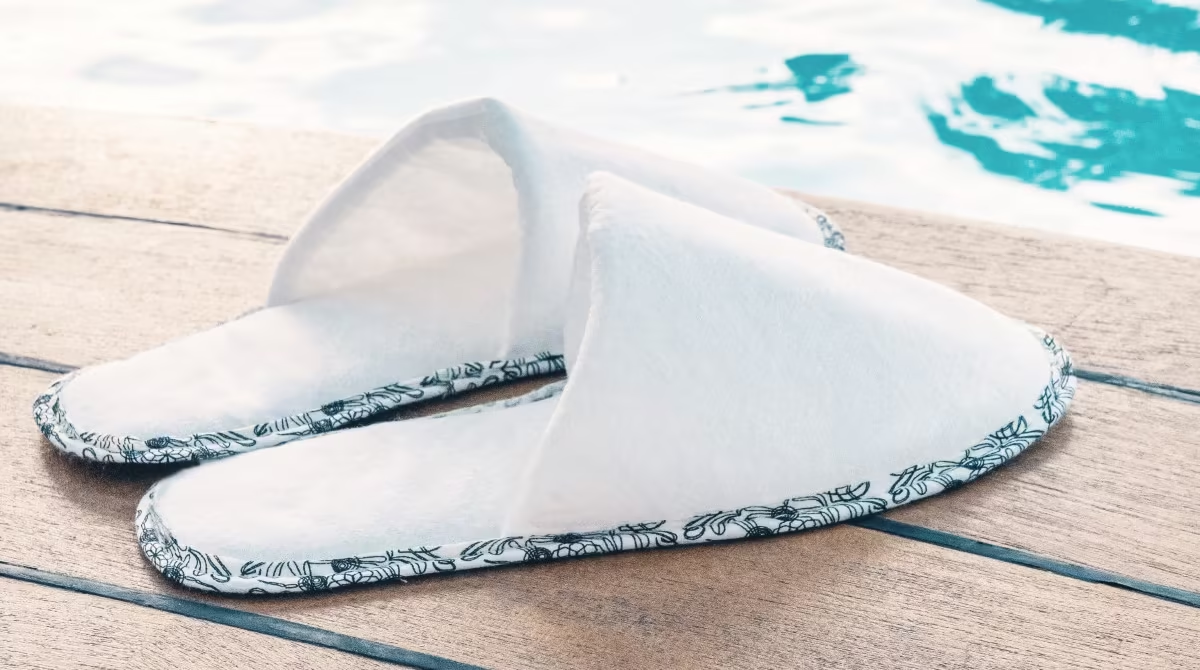
Luxury hotel slippers are small touches that can make a big difference to guests. They are often regarded as a a symbol of comfort and well-being, allowing guests to relax and feel at home whilst away from home. Although hotel slippers are available in a variety of materials and styles, eco-friendly, organic slippers are becoming increasingly popular due to their reduced environmental impact and durability. In this article, we will explore the importance of luxury hotel slippers and the benefits of eco-friendly, organic slippers for guests and the environment.
Luxury hotel slippers: the benefits for guests
The luxury hotel slippers offer numerous benefits to hotel guests, whether they are on a business trip or on holiday. Firstly, they provide a sense of comfort and relaxation that allows guests to feel right at home. After a long day of work or sightseeing, guests can slip on these cosy slippers and leave the stresses of the day behind. Luxury hotel slippers are also practical for guests who need to move frequently between their room and the hotel’s facilities, such as the swimming pool or spa. They are easy to slip on and off, allowing guests to get around quickly and comfortably.
What’s more, luxury hotel slippers are also hygienic. They offer extra protection for guests’ feet as they move around their hotel room, preventing any direct contact with the floor. The slippers are usually changed between guests, ensuring a hygienic, high-quality experience.
Finally, luxury hotel slippers can also be a handy keepsake for customers. Slippers bearing the hotel’s logo can serve as a memento of their stay and a way of remembering the pleasant moments spent at the hotel. Overall, luxury hotel slippers offer guests a more comfortable and convenient stay, adding a touch of luxury to their time there.
Eco-friendly slippers: the benefits for the environment
Organic, eco-friendly slippers also offer significant environmental benefits for the luxury hospitality industry. Firstly, the materials used to make these slippers are often sourced from sustainable and renewable sources, which reduces their overall environmental impact. The organic slippers are often made from materials such as organic cotton, hemp, bamboo or merino wool, which are sustainable and environmentally friendly materials.
Furthermore, organic slippers are generally made from non-toxic materials, which means they are safe for the environment. The toxic materials used in the production of conventional slippers can have a negative impact on the environment and human health, making eco-friendly organic slippers even more important for protecting the planet.
Finally, eco-friendly, organic slippers are often designed to last longer, thereby reducing waste and the need for frequent replacement. Luxury slippers, in general, often a longer lifespan than cheap slippers, but eco-friendly, organic slippers offer an even more sustainable solution for the environment.
Overall, eco-friendly, organic slippers are an environmentally responsible choice for luxury hotels. By using sustainable and renewable materials, avoiding toxic substances and designing durable slippers, the hospitality industry can help protect the planet whilst offering its guests a high-quality stay.
Reducing one’s environmental impact
As well as the choice of materials used to make eco-friendly/organic slippers, their packaging and end-of-life must also be taken into account to minimise their environmental impact. Synthetic packaging should be avoided in favour of’recycled, recyclable or biodegradable packaging. The fabrics used to make slippers can also be chosen on the basis of their environmental impact: natural, organic or bio-based fibres, such as organic cotton, viscose or jute, are preferable to synthetic fibres that are harmful to the environment.
It is also important to consider the life cycle of slippers, from production to the end of their useful life. The chemicals used in the manufacture of slippers should be minimised, and natural resources should be conserved through organic farming and the use of natural fibres. Recycled slippers are also a worthwhile alternative for limiting the use of new raw materials and reducing the water consumption required for their production.
Finally, the slippers can also be made and washed in a way that organic and environmentally friendly, by avoiding the use of products that are harmful to the environment and prioritising certified labels. By adopting a comprehensive and responsible approach to the production of luxury hotel slippers, it is possible to minimise their environmental impact and preserve natural resources for future generations.
What materials should be used for eco-friendly hotel slippers?
The materials used to make eco-friendly, organic slippers are often different from those used for conventional slippers. Organic cotton is one of the most commonly used materials in the production of eco-friendly, organic slippers. This type of cotton is grown without the use of pesticides or chemical fertilisers, which significantly reduces its environmental impact.
Hemp is another popular material for eco-friendly, organic slippers. Hemp is a fast-growing plant that requires little water to grow and can be cultivated without the use of pesticides or chemical fertilisers. Hemp is also resistant to mould and bacteria, making it an ideal material for slippers.
Bamboo is also a material used in eco-friendly, organic slippers. Bamboo is a fast-growing plant that can be harvested several times a year, making it highly sustainable. Bamboo fibres are soft, lightweight and breathable, making them a comfortable choice for slippers.
Finally, the merino wool is another material used in eco-friendly, organic slippers. Merino wool is a natural fibre that is soft, breathable and water-resistant. It is also biodegradable, making it eco-friendly and environmentally friendly.
Overall, the materials used in eco-friendly, organic slippers are often sourced from sustainable and renewable sources, making them environmentally friendly. By using these materials in the production of slippers, luxury hotels can help protect the planet whilst offering their guests a high-quality holiday experience.
In conclusion, luxury hotel slippers are an important element in providing guests with a comfortable and relaxing stay. By choosing eco-friendly, organic slippers, luxury hotels can not only offer their guests optimal comfort, but also help to protect the environment. The materials used in eco-friendly, organic slippers are often sourced from sustainable and renewable sources, which reduces their impact on the planet. Eco-friendly, organic slippers are also often more durable and of a higher quality than conventional slippers, which can reduce replacement costs for hotels. All in all, eco-friendly, organic slippers are a smart and responsible choice for luxury hotels seeking to offer a high-end guest experience whilst respecting the environment.
En tant que fabricant spécialisé, Caüssun Hospitality accompagne les hôtels indépendants haut de gamme, palaces et groupes hôteliers dans le choix de chaussons d’accueil personnalisés à leur image, complétés par une gamme de sacs et accessoires textiles éco-conçus (sacs à linge, sacs sèche-cheveux, pochettes). Demandez un devis pour votre établissement.